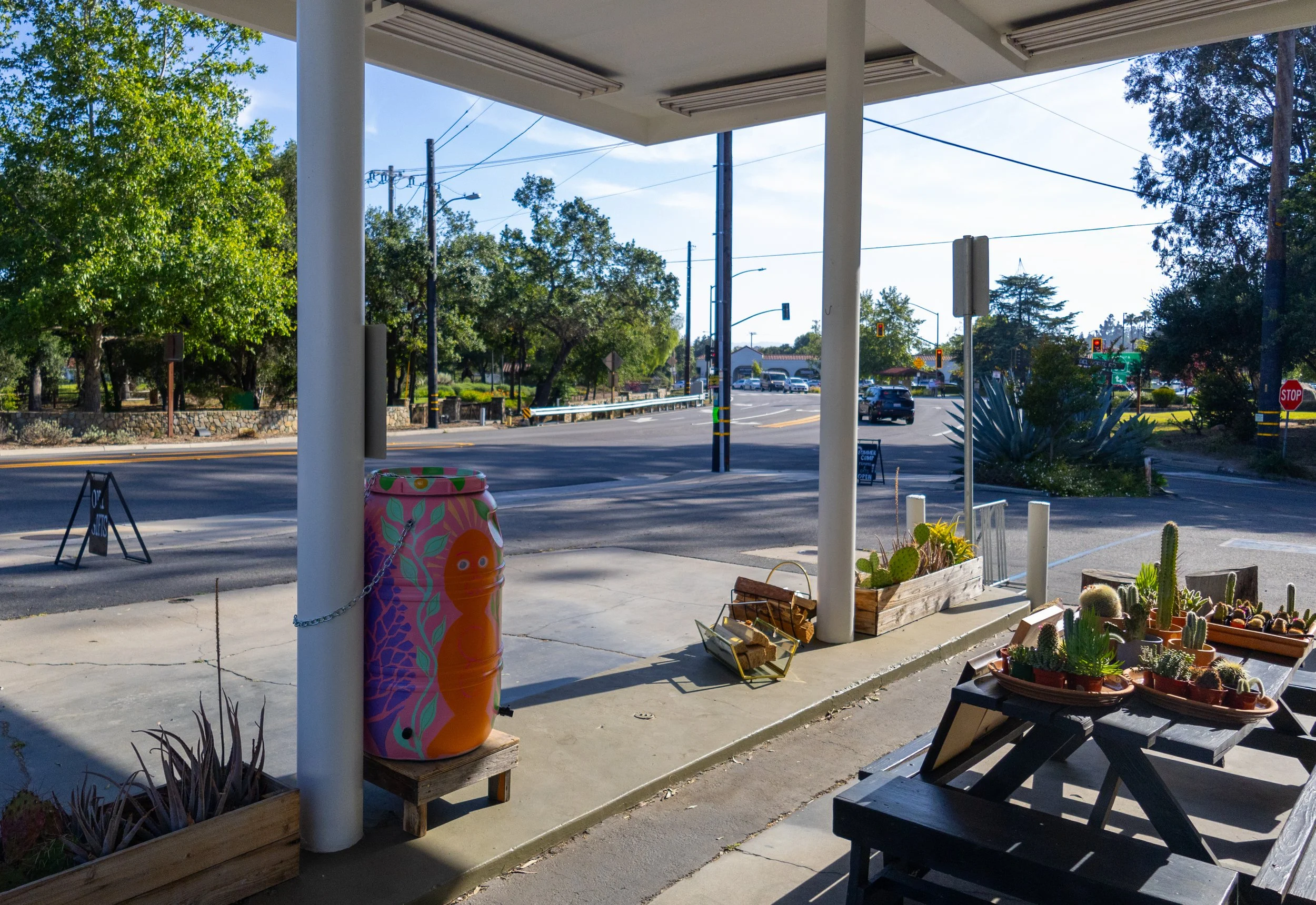
Ojai’s Rainfall Reimagined
The Solution
Rain barrels are a simple form of water infrastructure that capture and store rainwater from rooftops. Instead of letting runoff flow into storm drains, barrels collect it for reuse to:
Irrigate plants, gardens, and landscapes.
Recharge local groundwater through overflow features.
Despite their effectiveness, rain barrels remain largely invisible in most communities. If people rarely see them, they rarely think about installing one, and a valuable local resource goes unused. Recognizing that rain barrels are rarely seen and therefore rarely used, H2Ojai was created to bring this simple solution into everyday community life.
The Project: H2Ojai
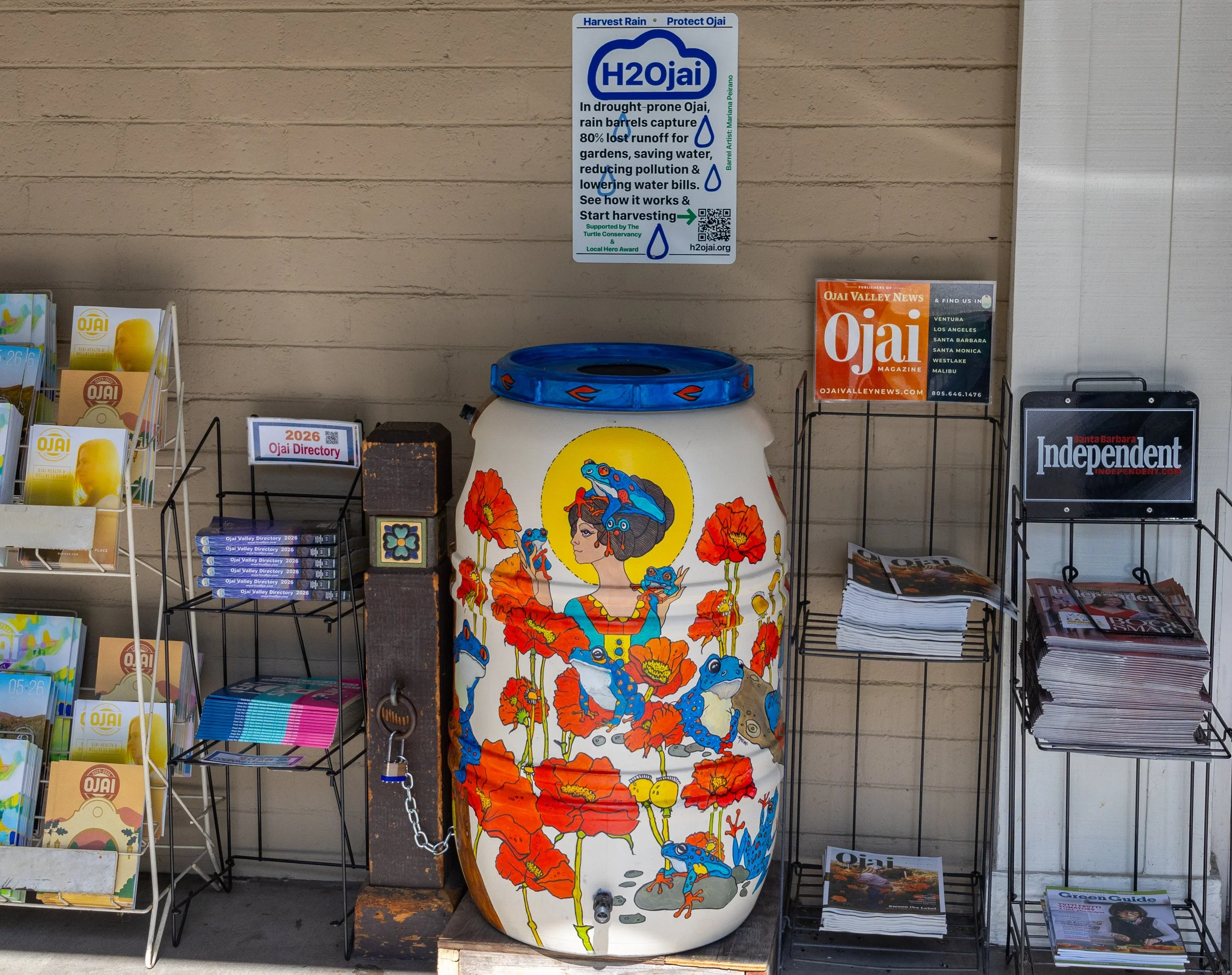
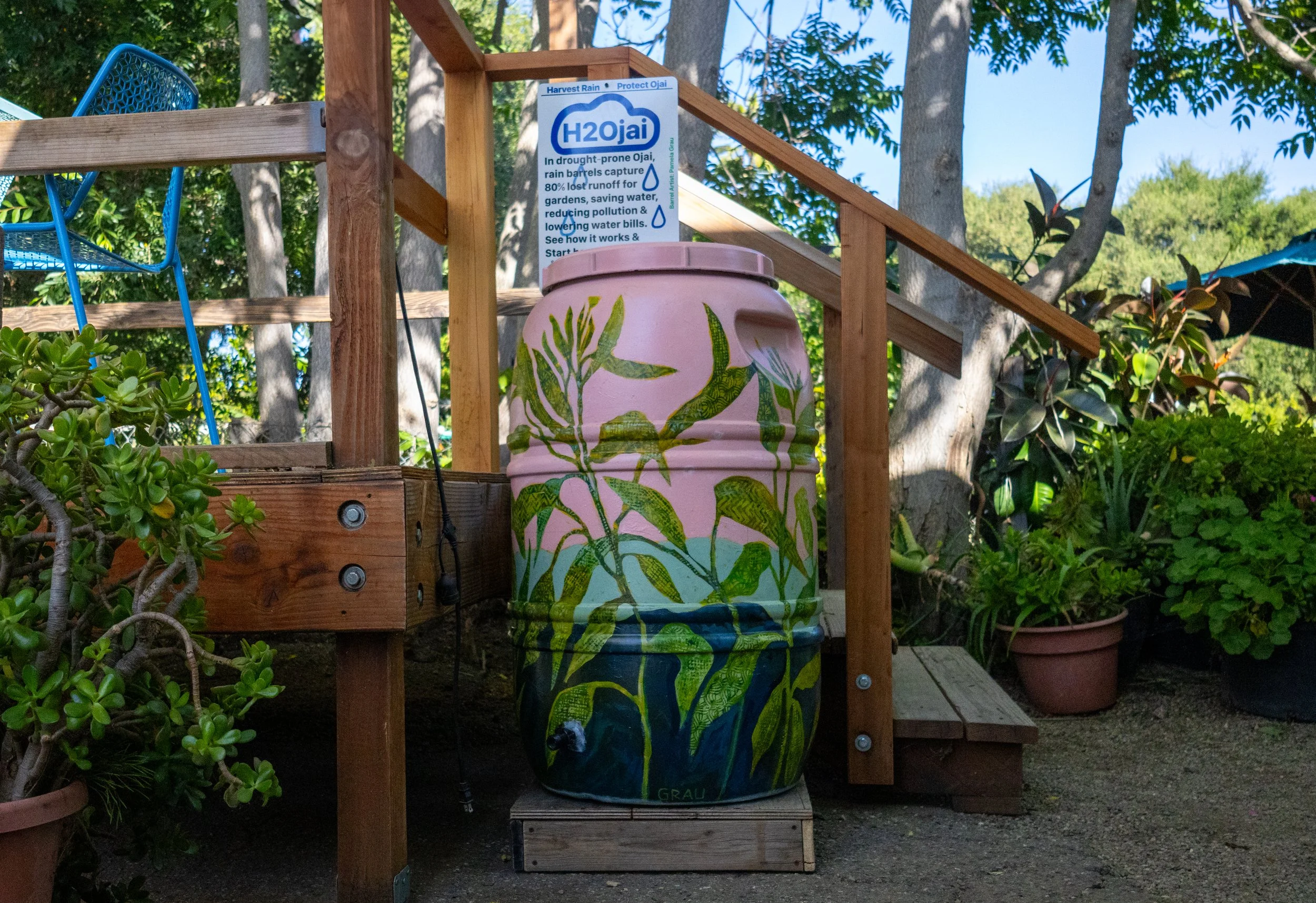
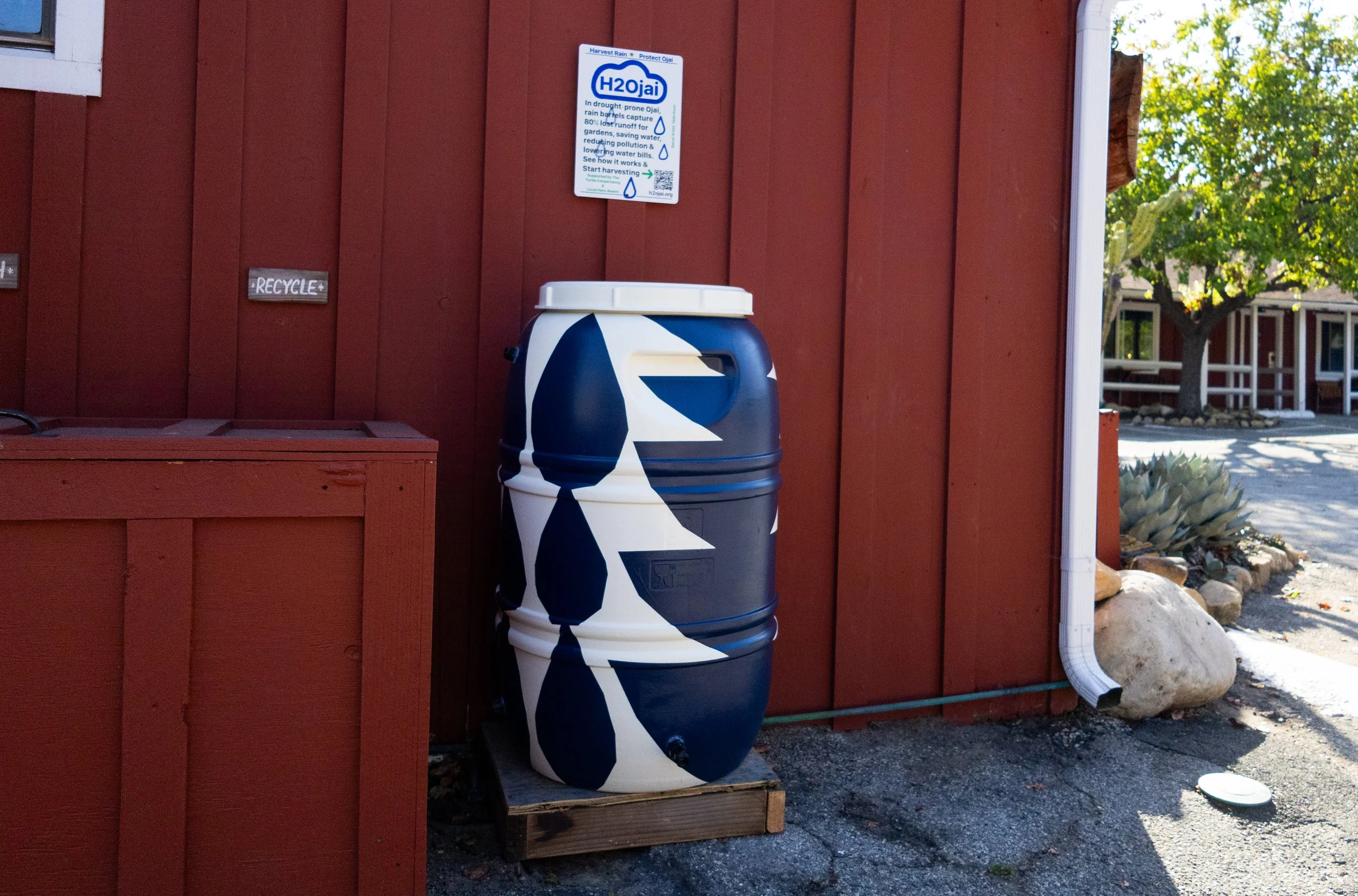
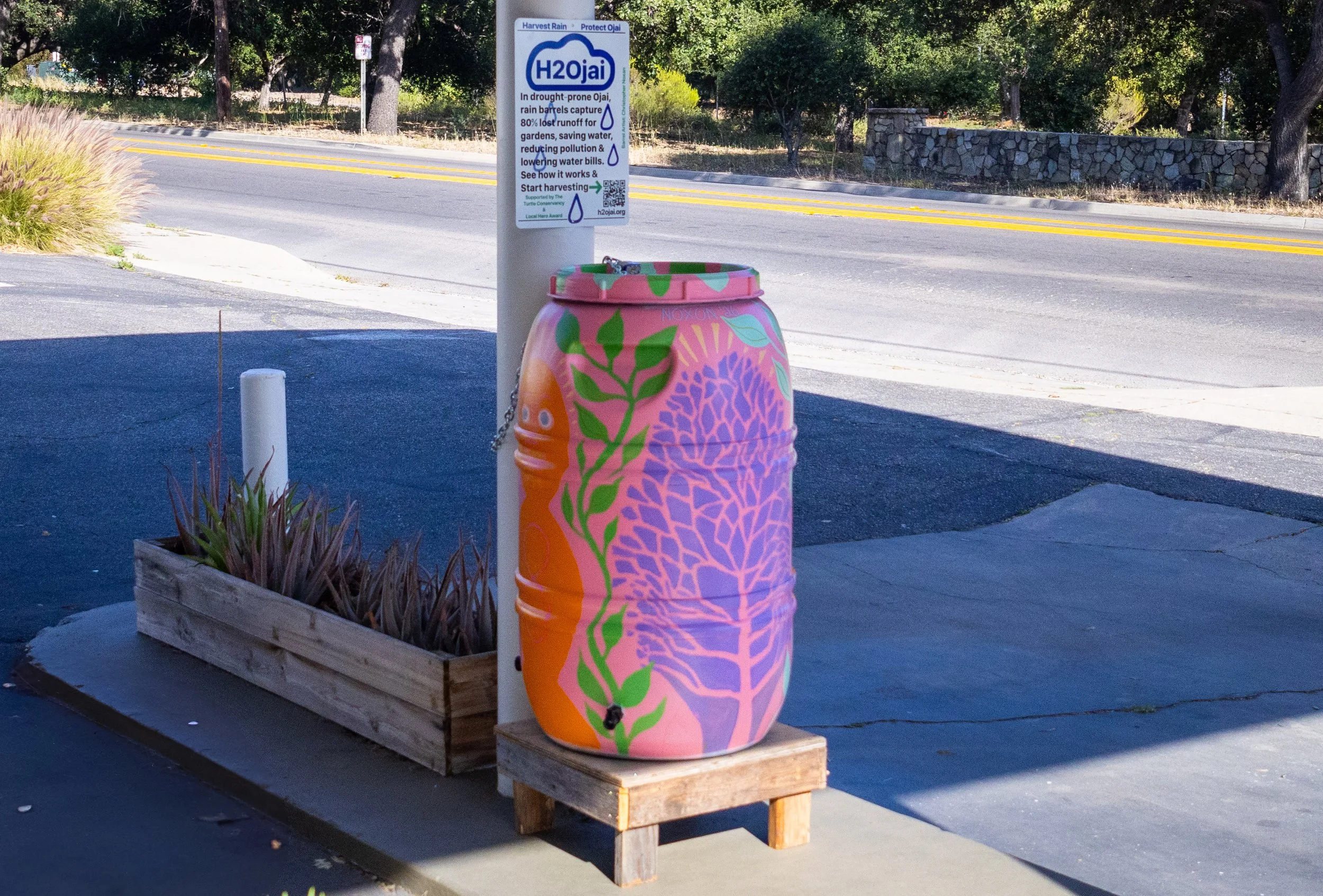
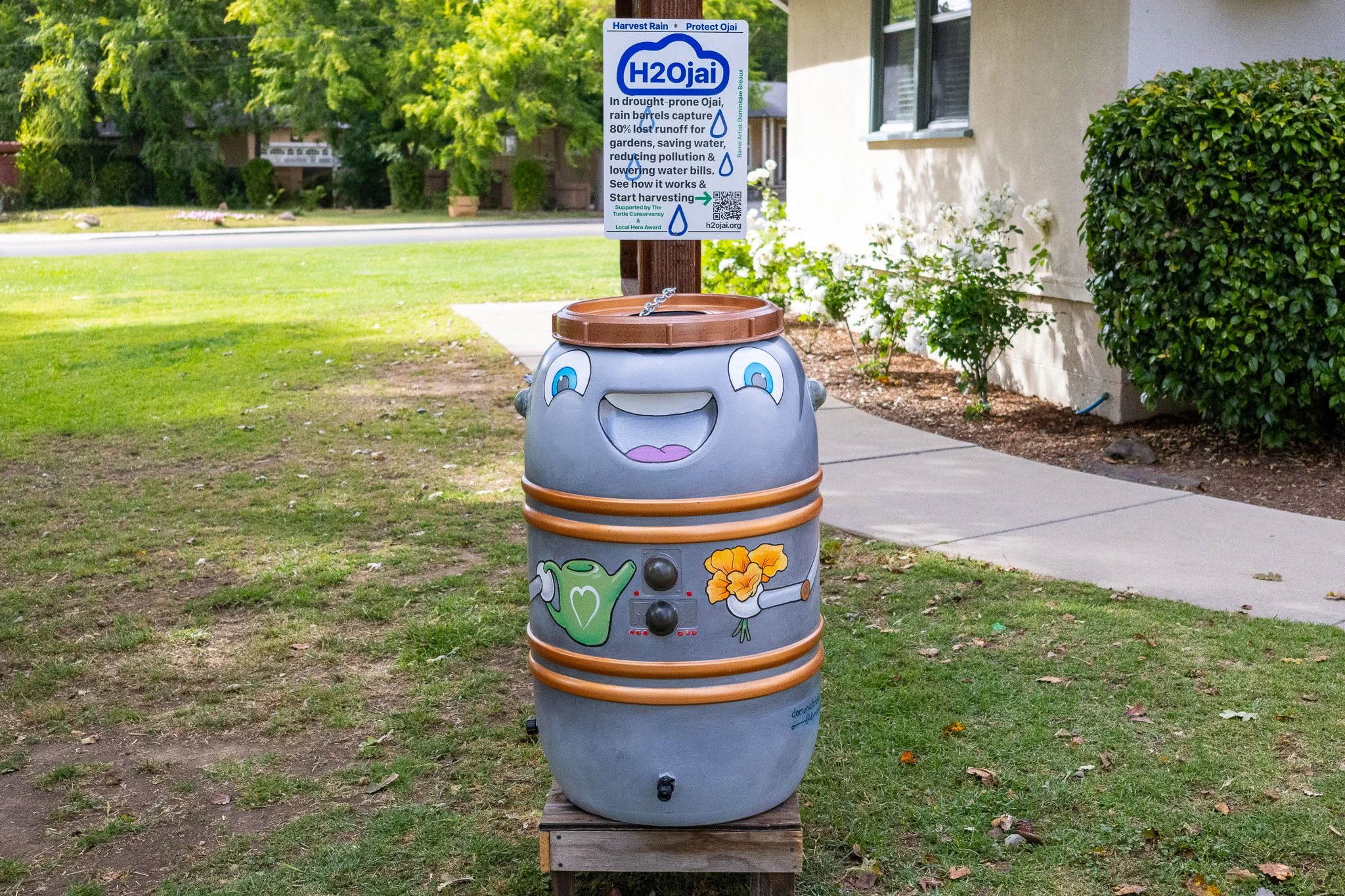
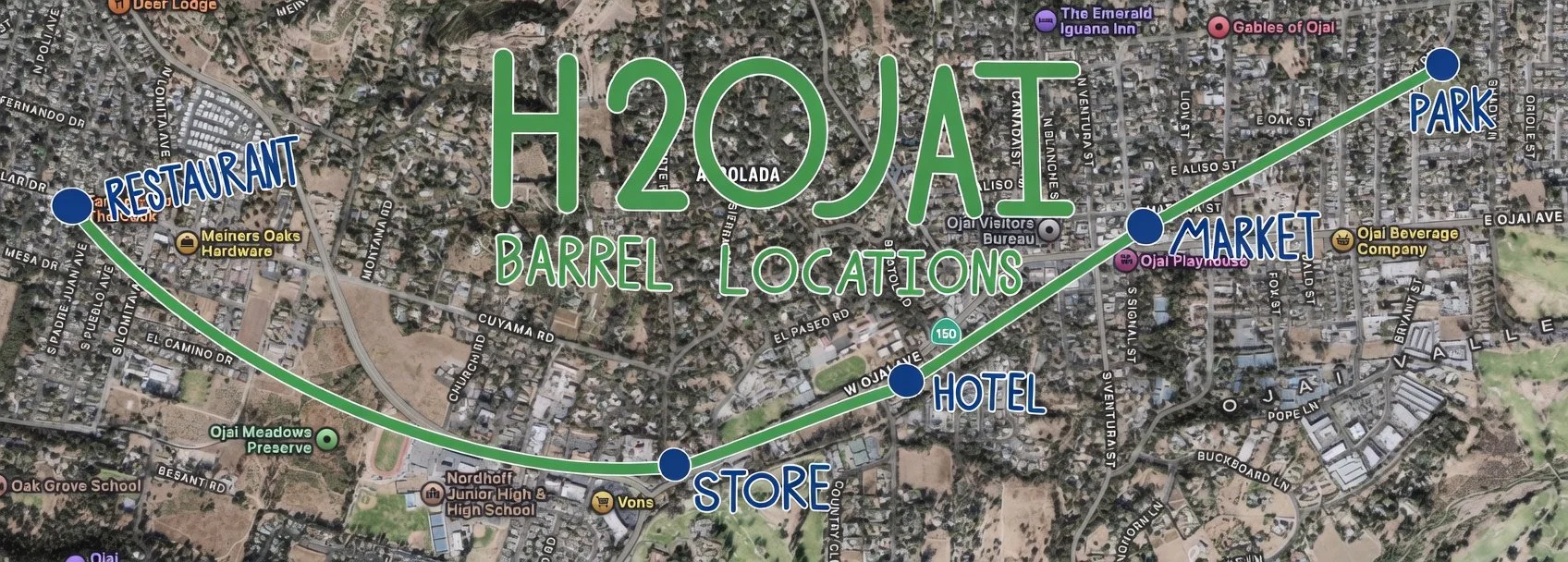
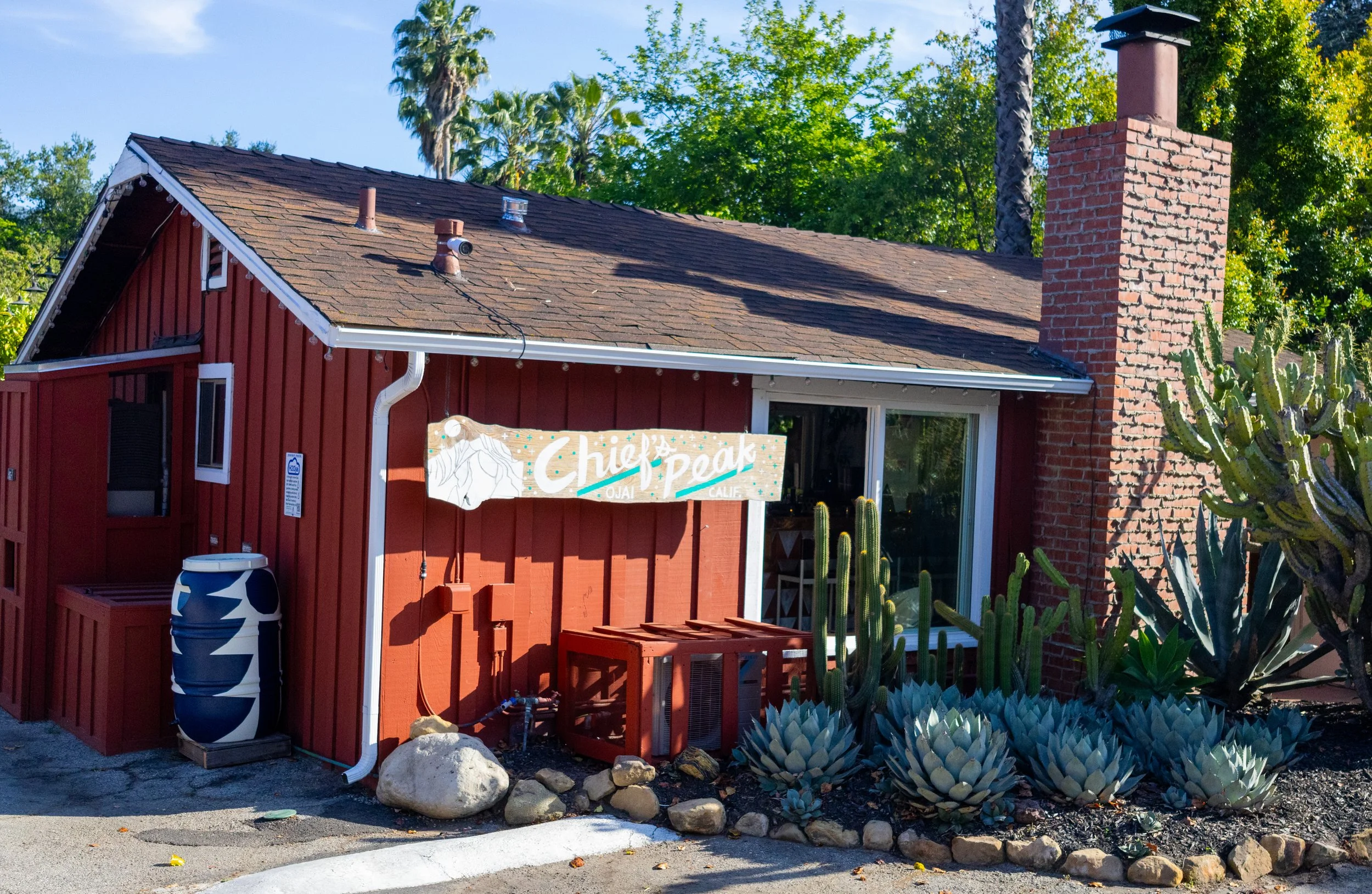
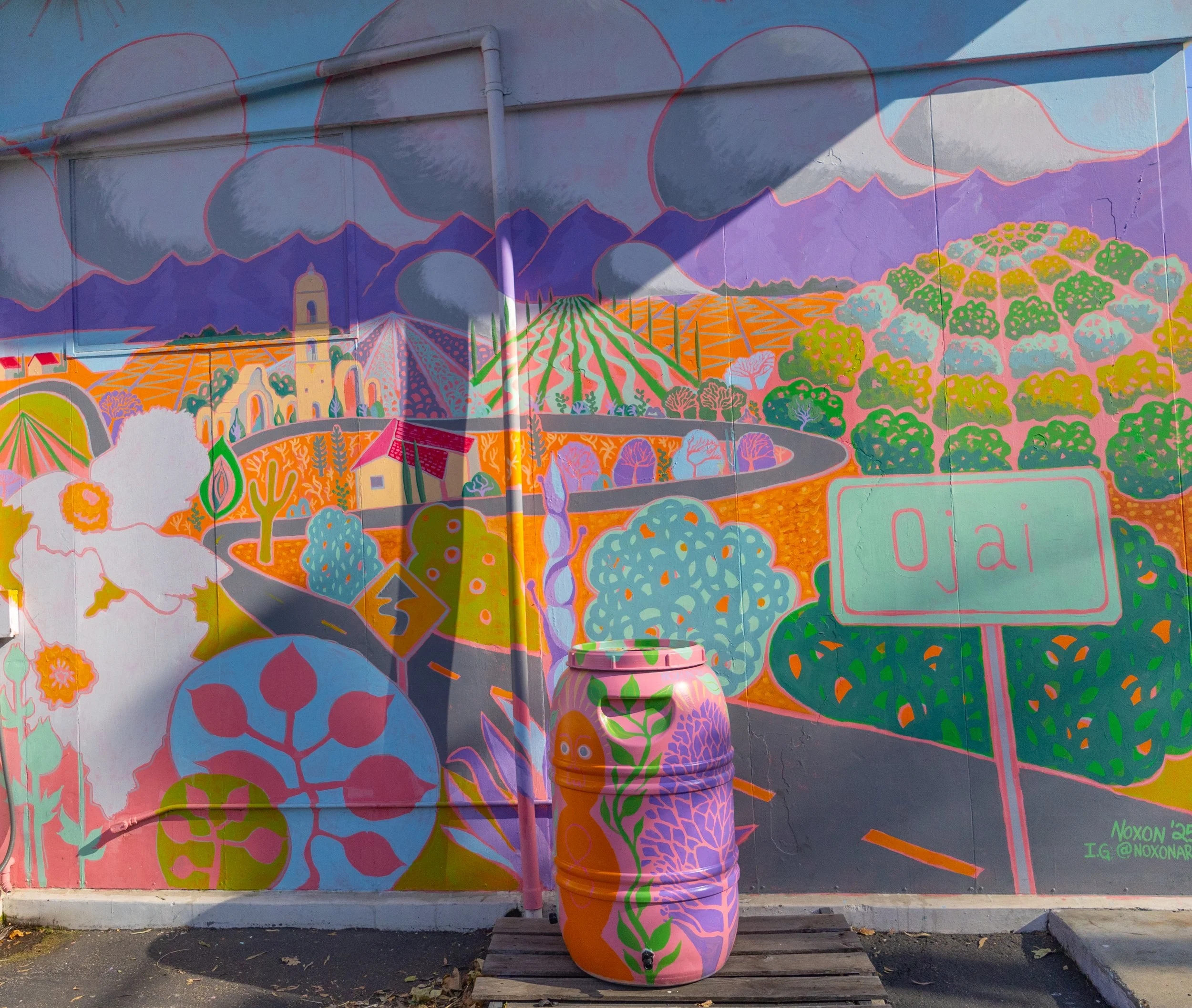
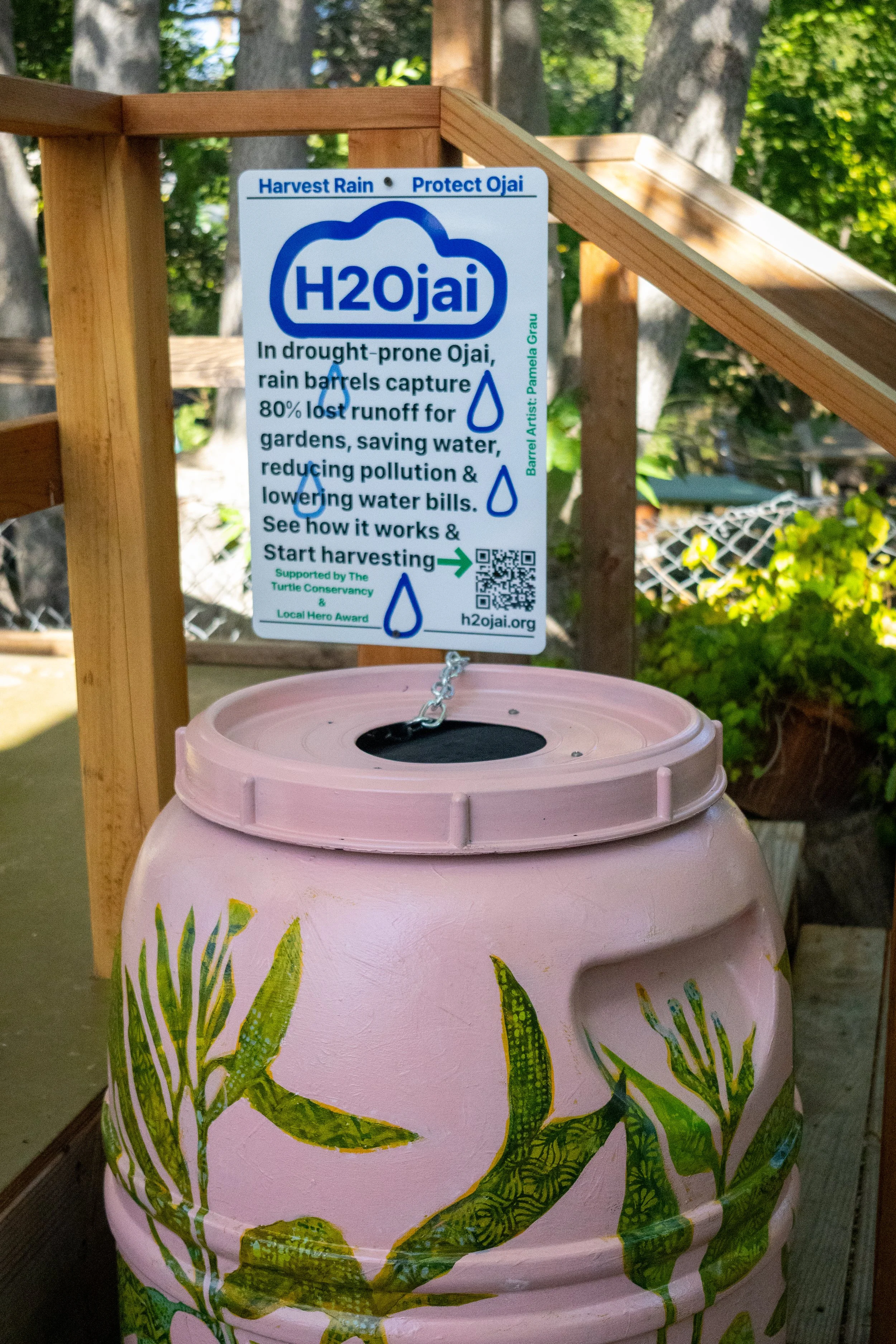
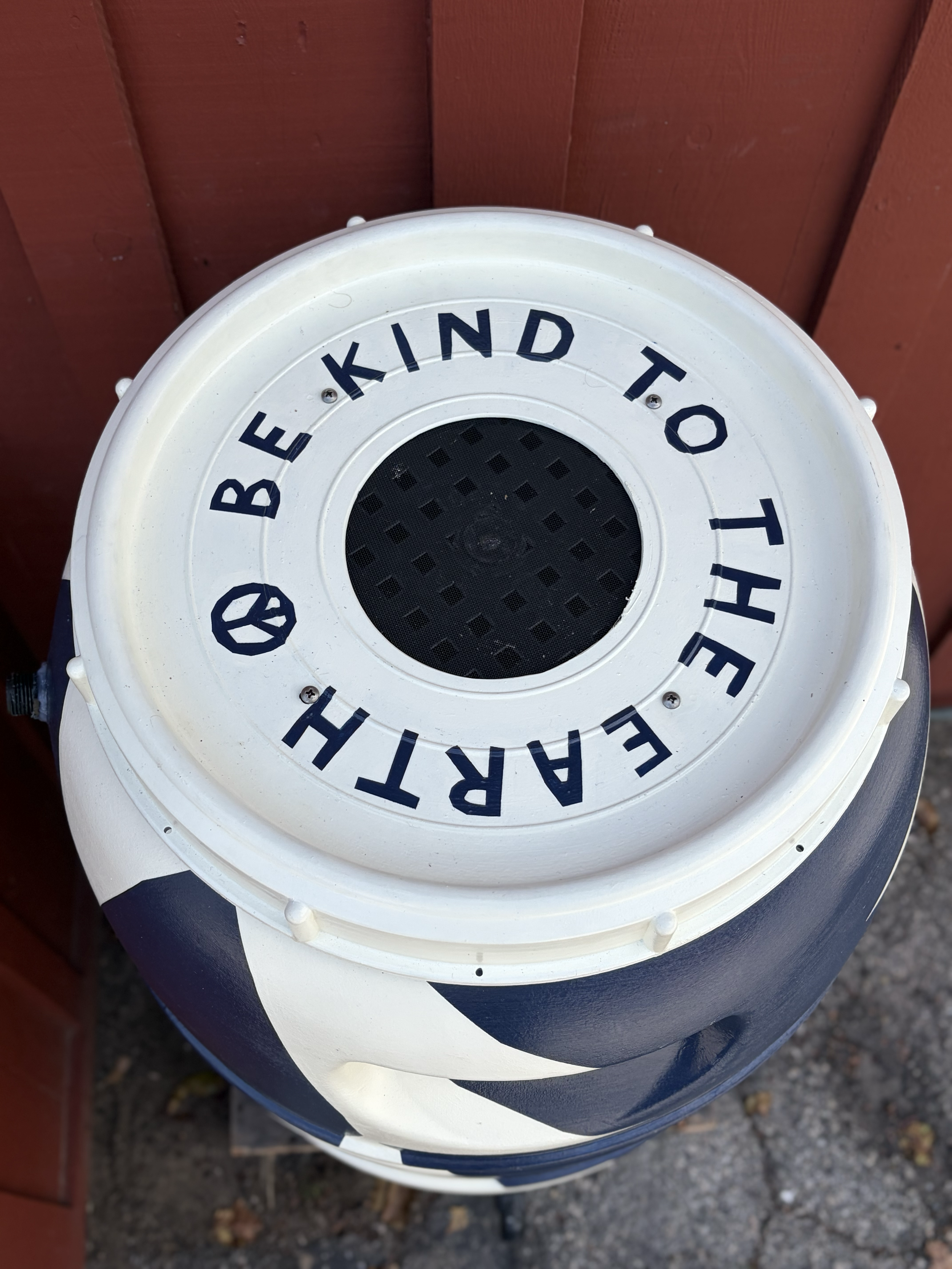
H2Ojai installed five artist-painted rain barrels in high-traffic public spaces throughout Ojai to promote and inspire rainwater harvesting.
The Origin: Started as a finalist proposal for the Turtle Conservancy’s John Broesamle Local Hero Award 2026, which recognizes high school students for impactful environmental work in the Ventura River watershed.
The Goal: To inspire residents to harvest rain by making the infrastructure a beautiful, public point of interest.
The Resource: This initiative works alongside this website to teach residents exactly how to start harvesting rain.
Turning The Tide
The barrels are painted by artists to draw people in. Public art naturally sparks curiosity, and when someone approaches the barrel, they are invited to learn more through an on-site educational sign and QR code that links to this website.
The goal is to make rainwater harvesting visible in everyday community spaces. If people never see or hear about a rain barrel, they rarely think about installing one. By placing these painted barrels in public community spaces, the project turns a simple piece of water infrastructure into something people notice, learn from, and inspire residents and visitors to adopt the practice at home.
Before H2Ojai, most drought response efforts focused on policy led by the city and local water agencies. While important, much of the outreach was technical, buried in long documents, and rarely visible or engaging for residents. Larger solutions like berms, infiltration basins, and retention areas help manage water, but they are often out of sight and disconnected from daily community life.
H2Ojai introduces a different approach: collective action. The project encourages residents to become part of the solution. Even small actions add up; if 100 residents installed a single rain barrel, the community could save up to 50,000 gallons of water each year. Instead of treating rain harvesting like a technical chore, H2Ojai aims to make it engaging, visible, and something the whole community can participate in.
Locations & Artists
The Bigger Shift
Rain harvesting is part of a much larger movement happening across the 21st century. A shift away from total dependence on centralized systems. The grid, whether for energy or water, is increasingly vulnerable to climate change, aging infrastructure, and political instability. When individual homes become even partially self-sufficient, the whole community becomes more resilient. Think of it like solar: everyone understands that rooftop solar makes sense for energy independence. Rainwater harvesting is the same idea for water, at a fraction of the cost and with far less complexity to install. Big problems don't always need one big solution; they need 10,000 small ones. And when households supply their own non-potable water, it frees up city resources and experts to focus on the larger, more complex infrastructure challenges. Sustainability shouldn't be a separate industry. It should just be how we live.
The Mindset Shift
Why don’t more people collect rain?
Several behavioral and perceptual barriers make rain harvesting uncommon:
People don’t perceive rain as a resource. Rainfall is often seen as something that “just disappears,” so its connection to everyday household water use feels abstract.
The convenience of tap water makes the impacts of drought feel distant; when water comes easily from the tap, conserving water feels less urgent.
Rain barrels are rarely visible in most communities. If you never see them in public or in neighbors’ yards, you’re unlikely to consider installing one yourself.
Interest spikes only during droughts. Once normal rainfall returns, concern — and action — tends to fade.
H2Ojai addresses these barriers directly by making rain barrels visible in public spaces, explaining how and why they work, and helping shift the mindset from rain as runoff to rain as a valuable local resource.